5 Hidden Features of the Sony Wh 1000Xm6 You Must Know About
The Sony WH-1000XM6 sits in the conversation for premium noise‑cancelling over‑ear headphones, but many of its most useful capabilities are easy to overlook. Beyond the headline specs — excellent active noise cancellation, high‑resolution codecs, and long battery life — Sony packs subtle software and sensor-driven conveniences that change how the headphones perform in day‑to‑day life. This article highlights five lesser-known features of the WH-1000XM6, explains why they matter for real-world scenarios, and follows with a deeper product analysis, pros & cons, a compact comparison, and a buying guide to help prospective buyers decide if these headphones match their needs.
Introduction
When buyers compare flagship ANC headphones, attention usually lands on sound quality, ANC strength, battery life, and brand reputation. Those are important, but owners who dig into settings and the companion app often unlock a better, more personalized experience. The WH-1000XM6 includes several hidden or under-advertised features that address common buyer concerns — especially for frequent travelers, remote workers, and commuters who switch between noisy public spaces and quiet home environments.
Five Hidden Features and How They Help
1. Adaptive Ambient Mode with Contextual Presets
Many users know Sony’s Ambient Sound modes, but the WH-1000XM6 takes this further with adaptive ambient behavior and contextual presets. Rather than simply toggling between “Ambient On” and “Transparency,” the headphones can auto-adjust the level of ambient sound based on detected activity and location. For example, the headphones can prioritize speech clarity when the wearer is walking in an urban area, and minimize street noise on a train without drowning out announcements.
Real-world use case: a commuter who needs to hear station announcements but still wants reduced road noise will benefit — the headphones let important voices through while keeping rumbles and wind suppressed. Buyers who split their time between office, gym, and travel will appreciate how the headphones reduce the need for manual adjustments.
2. Flight/Air Pressure Optimizer
Sony has included an optimizer that compensates for changes in cabin pressure and the way the ears perceive bass and noise during flights. It’s not as visible as ANC toggles, but enabling the “airplane/pressure” optimizer in the app refines noise control and tonal balance for high-altitude conditions.
Real-world use case: frequent flyers often notice bass can feel weak or ANC performance can feel uneven at cruising altitude. This optimizer improves perceived bass and reduces the need to crank volume — a useful power‑and‑comfort win for travelers concerned about hearing health and long-haul comfort.
3. Advanced Multipoint Management with Priority Switching
Multipoint Bluetooth is standard on many modern headphones, but the WH-1000XM6’s implementation is nuanced: it supports simultaneous connections and includes priority-switching logic that reduces interruptions. Instead of blindly switching to the most recently active device (which can drop audio or interrupt a video), the headphones can be configured to prefer phone calls or a primary device, and to wait for a pause before switching.
Real-world use case: a hybrid worker on a laptop who also keeps a phone connected will find the priority-switching prevents media playback from the laptop being interrupted by background phone notifications, but still allows calls to take precedence. This is particularly helpful for people who rely on video conferencing and also want a stable listening experience for music or podcasts.
4. Personalized Spatial Audio / 360 Reality Tuning
Sony’s 360 Reality Audio and head‑tracking features are sometimes framed as gimmicks, but the WH-1000XM6 includes subtle personalization that improves spatial rendering for mixed content (music, streaming concerts, compatible video). A short calibration sequence in the app uses measurements or selfie-based head/ear scanning to tune the virtual soundstage to a user’s ear shape and head movements.
Real-world use case: listeners who enjoy immersive music mixes or live-streamed concerts will notice a more stable and convincing sense of space, especially during head turns or small movements. Buyers who value a lifelike listening experience for mixed media (music, movies, VR/AR content) benefit the most.
Shop the latest Audio & Headphones picks on Amazon.
See Deals →5. In-Call AI Noise Reduction and Directional Mic Tuning
Call quality has improved as manufacturers layer signal processing and AI‑based noise suppression on top of better microphone arrays. The WH-1000XM6 hides a directional mic tuning mode and advanced in-call noise suppression that prioritizes human speech and filters out ambient sounds like traffic or cafe chatter. These modes can be enabled or tuned in the companion app.
Real-world use case: remote workers and frequent callers will appreciate clearer calls without manually moving to quieter spaces. Buyers who prioritize conference calls or customer-facing work will find the headphones reduce distractions for both the speaker and the listener on the call.
Detailed Product Review and Analysis
Design and Comfort
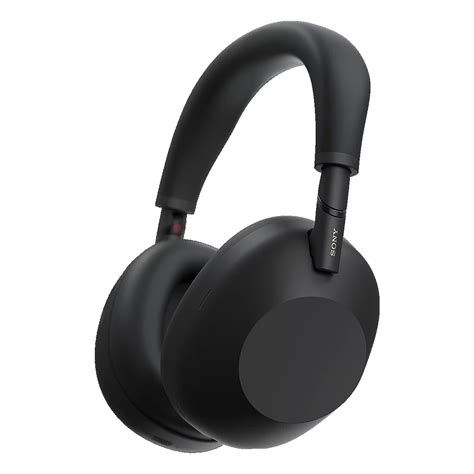
The WH-1000XM6 continues Sony’s trend of soft memory-foam ear pads, a light but sturdy headband, and a fold-flat design for storage. For long listening sessions, comfort matters more than a gram of weight — Sony’s clamp force and cushioning are tuned to balance passive isolation and pressure relief. Buyers who wear glasses or use headphones for multi‑hour flights should look for the specific fit: the earcup shape and foam density reduce pressure on the temples and help with long-term comfort.
Sound Quality and Tuning
Sonically, Sony typically tunes a neutral-yet-engaging signature with slightly elevated bass and clear mids. The WH-1000XM6 supports high-resolution codecs like LDAC and AAC, and includes digital sound enhancements such as DSEE (Digital Sound Enhancement Engine) to restore compressed audio detail. The headphone EQ in the app and several presets help buyers match the sound profile to genres — from tight, controlled bass for electronic music to a warmer, vocal-forward setting for podcasts.
Active Noise Cancellation (ANC)
ANC is a headline feature: multiple microphones, feedforward/feedback ANC paths, and adaptive algorithms combine to suppress an extensive range of noises. The real difference comes from the additional software features (adaptive ambient, pressure optimizer) that tune ANC to environment and activity, producing a more refined experience than a static ANC algorithm.
Battery and Charging
Battery life on Sony’s flagship models aims to deliver a full workday and beyond with ANC engaged. Fast-charge capabilities offer a few hours of playback from a short charge, which is helpful for travelers who forget to charge overnight. Buyers with heavy daily usage should account for long-term battery degradation — replaceable battery options are not available on most consumer ANC headphones, so long-term health is a consideration.
Connectivity and App Experience
The Sony Headphones Connect app is where many hidden features live. It exposes ANC fine-tuning, EQ presets, spatial audio calibration, call noise reduction, and multipoint settings. Connection stability depends on device Bluetooth versions and interference; the app also offers firmware updates that have historically improved performance and added features after purchase.
Microphone and Call Quality
Microphone arrays combined with beamforming and AI noise reduction yield strong call clarity in typical indoor settings and moderate outdoor noise. Directional mic tuning and in-call noise suppression reduce the need to move to quiet rooms for casual calls, which makes the headphones a practical tool for remote workers and digital nomads.
Pros & Cons
- Pros
- Excellent ANC with adaptive and situational optimizations
- Rich sound with high-resolution codec support (LDAC) and app EQ
- Comfortable for long listening sessions
- Smart multipoint with priority switching reduces interruptions
- Hidden features (air pressure optimizer, in-call AI tuning) improve real-world usability
- Cons
- Premium price compared with mid-range options
- Some advanced features require time in the app to discover and configure
- Not intended for intense workouts—sweat resistance is limited compared with sports earbuds
- Battery is non-user-serviceable; long-term battery life will decline
Quick Comparison Table
| Feature | WH-1000XM6 | WH-1000XM5 (Previous) | Competitor Example: Bose Headphones 700 |
|---|---|---|---|
| ANC | Highly adaptive with context-aware presets and pressure optimizer | Very strong ANC, less contextual automation | Excellent ANC, simpler user controls |
| Sound Quality | Neutral with refined tuning, LDAC support, personalized spatial audio | Neutral, strong clarity, LDAC on supported devices | Balanced, slightly brighter presentation |
| Call Quality | Directional mic tuning + AI suppression | Good mic array, effective noise reduction | Very good in quiet settings, slightly less adaptive outdoors |
| Comfort | Soft pads, moderate clamp force optimized for long wear | Comfortable, slightly different earcup shape | Comfortable, slightly firmer clamp for some users |
| Smart Features | Advanced app features, multipoint priority switching, flight/pressure mode | App features, speak-to-chat, adaptive sound control | Good app support, intuitive touch controls |
Buying Guide: What Buyers Typically Care About
1. How Important Is ANC for Your Use?
If most listening happens in noisy environments — commuting, open-plan offices, or on planes — prioritize ANC strength and how the headphones adapt to changing noise. The WH-1000XM6’s contextual ANC is especially helpful for commuters who want to hear announcements without sacrificing noise control.
Discover deals on Audio & Headphones — updated daily.
Browse Now →2. Sound Profile and Codec Support
Sony’s headphones offer multiple tuning options. Buyers should check codec support on their source device (LDAC on Android for the best high-res over Bluetooth) and whether they prefer a neutral reference sound or a warmed-up, bass-forward signature for casual listening. The app’s EQ presets and DSEE processing help match the headphones to different listeners’ preferences.
3. Call Usage and Microphone Performance
For remote workers and frequent callers, microphone performance and in-call processing are essential. Choose headphones with beamforming mics and advanced call noise suppression. The WH-1000XM6’s directional mic tuning and AI-driven suppression make it a strong choice for multi-location professionals.
4. Comfort and Long‑Session Wearability
Comfort is subjective but critical. Look for lightweight construction, soft memory-foam pads, and a headband design that balances clamp force. If the headphones will be worn for long flights or workdays, prioritize models that reviewers consistently call out for all‑day comfort.
5. Battery Life and Fast Charging
Consider average daily usage. Buyers who travel frequently should value both long battery life and fast-charge abilities. Also verify how battery life is specified (with ANC on/off) and whether the manufacturer provides a realistic expectation for mixed usage including calls and app features.
6. App Ecosystem and Updates
Many advanced features are delivered through the companion app, including firmware updates that can add or refine functionality. Buyers should check app reviews and whether the manufacturer has a track record of meaningful post‑purchase updates.
7. Price and Long-Term Value
Flagship ANC headphones command a premium. Evaluate whether the combination of ANC, sound tuning, comfort, and hidden features justifies the cost relative to alternatives. For buyers who prioritize one or two attributes (e.g., best possible ANC or portability) there may be better-suited models at lower price points.
Practical Tips to Unlock the Hidden Features
- Install and explore the Sony Headphones Connect app: Many optimizers and calibration routines are available only through the app.
- Run the flight/pressure optimizer before travel: Do a quick calibration in the airport or before takeoff to notice immediate ANC and tonal improvements.
- Set multipoint priorities: If the headphones keep switching at inconvenient times, change priority settings to prefer calls or a specific device.
- Calibrate spatial audio: Use the 360 Reality tune or head/ear profile setup for better spatial rendering with compatible content.
- Check for firmware updates: Occasionally, Sony releases updates that refine ANC, connectivity, or call handling — install them when available.
Conclusion
The WH-1000XM6 combines the obvious strengths buyers expect from a flagship Sony model — refined sound, strong active noise cancellation, and comfortable wear — with a set of subtle, high-value features that reward owners who take a few minutes to configure the headphones. The adaptive ambient presets, flight/pressure optimizer, refined multipoint logic, personalized spatial audio, and in-call AI tuning make a tangible difference in everyday contexts: commuting, remote work, travel, and immersive listening. For buyers who care about real-world usability and want headphones that adapt rather than force manual adjustments, these hidden features make the WH-1000XM6 worth investigating more closely.