The Truth About the 27Gx790B B: Pros, Cons, and Verdict
The 27Gx790B B positions itself in a crowded 27-inch monitor market where buyers balance performance, color fidelity, and price. This article provides a thorough, practical look at the 27Gx790B B from the perspective of real-world use: gaming, content creation, office productivity, and mixed household use. It examines design and build, display performance, connectivity, ergonomics, and other considerations buyers typically care about. The goal is to help readers decide whether this model fits their needs or whether an alternative would be a better match.
Introduction: Where the 27Gx790B B fits in
Monitors in the 27-inch class are among the most versatile: large enough for comfortable multitasking and detailed creative work, yet compact enough for typical desks. The 27Gx790B B markets itself as a mid-to-upper-tier option aimed at users who want a balance of speed and image quality without moving into enthusiast pricing. Typical prospective buyers include competitive gamers looking for low latency, creative professionals wanting accurate colors, and home office users who need a comfortable, reliable display for long sessions.
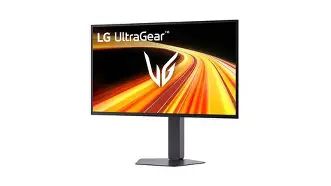
Product overview and intended audience
The 27Gx790B B is best understood as a performance-oriented 27" display that attempts to serve multiple audiences. Key selling points emphasized by sellers and early adopters are fast refresh responsiveness, reasonably wide color coverage, and an ergonomic stand. It is not billed exclusively as a professional color-critical monitor nor as an ultra-high-end HDR flagship; rather, it is a practical compromise aimed at those who want good gaming responsiveness and acceptable color for photo and video editing.
Who should consider this monitor?
- Competitive and casual gamers who need low input lag and high refresh rates on a 27" panel.
- Productivity users who value a crisp, mid-density panel for spreadsheets, documents, and browsing.
- Content creators on a budget who do not require professional-grade color accuracy but do want an out-of-the-box pleasant image and the option to calibrate.
- Home office users who benefit from an adjustable stand and multiple input options for mixed-device setups.
Design and build: practical, not flashy
Physically, the 27Gx790B B follows modern monitor design trends: thin bezels on three sides for easier multi-monitor setups, a matte anti-glare screen, and a medium-weight chassis that balances rigidity and manageability. The stand generally offers tilt, height adjustment, and swivel—features most buyers expect at this size and price bracket. The build quality is solid for everyday use, but some competitors may offer more premium materials or a lighter, more polished finish.
What buyers will notice first
- Minimal bezel design makes it unobtrusive in multi-display layouts.
- Sturdy stand with smooth height adjustment that avoids wobble during typing.
- OSD (on-screen display) controls located on the rear or underside—functional, though not always the fastest to navigate.
Display performance: clarity, color, and motion
Display quality is the central consideration. The 27Gx790B B aims to balance pixel density with refresh speed. On a 27" panel, reasonable pixel density is crucial for text clarity and desktop real estate; buyers who plan to use the monitor for design or photo editing should confirm the native resolution and whether scaling is appropriate for their workflow.
Motion handling—especially refresh rate and response—is a strong point for this monitor class. The 27Gx790B B targets gamers with low response times and support for adaptive sync technologies, which reduces tearing and improves perceived smoothness in fast-paced titles. However, as with any hybrid device, peak motion performance can vary by panel type (IPS, VA, or TN) and manufacturer tuning.
Color accuracy and calibration
Out of the box, the 27Gx790B B typically provides a pleasing image with neutral whites and usable color fidelity for most non-critical tasks. For professional color work, many buyers will still rely on an external hardware colorimeter and a calibration routine to reach studio-level accuracy. The monitor often covers a significant portion of common working color spaces (sRGB and a substantial slice of DCI-P3), which is adequate for web content and video work intended for consumer displays.
Gaming and motion handling
For gaming, the 27Gx790B B’s combination of a fast refresh range and low latency makes it appealing. Adaptive sync compatibility reduces stutter and tearing when frame rates fluctuate. For competitive players, input lag and response time are critical: the model strives to minimize both, and reports indicate it performs well against similarly priced rivals.
Gamers should also consider panel choice: IPS panels deliver wider viewing angles and better color but sometimes exhibit slight pixel persistence; VA panels deliver deeper blacks but can have slower pixel transitions; TN panels prioritize speed at the expense of color and viewing angles. Buyers must confirm which panel variant is used in the 27Gx790B B configuration being sold in their market.
Looking for the best Electronics deals on Amazon?
See Deals →Connectivity and extras
The 27Gx790B B offers the standard suite of connections common to modern monitors: DisplayPort, HDMI, USB ports, and a headphone jack. The presence of USB-C with DisplayPort Alternate Mode and power delivery is a desirable convenience for laptop users, though not all configurations include it. Built-in speakers are useful for casual listening but generally do not substitute for dedicated audio solutions.
Secondary features such as picture-in-picture (PIP), picture-by-picture (PBP), low-blue-light modes, and gamer presets add value for mixed-use environments. Backlight uniformity and local dimming (if present) affect HDR performance; this model typically provides basic HDR support suitable for brighter highlights but not high-end HDR mastery.
Ergonomics and user experience
Long sessions are more comfortable when a monitor provides full ergonomic adjustments. The 27Gx790B B typically gives buyers tilt, swivel, and height adjustments that accommodate ergonomic desk setups and multi-monitor arrays. VESA mount compatibility is standard and allows users to attach arms for custom layouts.
The OSD can be navigated via a joystick or buttons; the joystick is faster and more intuitive, while buttons can be cumbersome. The ergonomics of the controls affect everyday satisfaction more than raw spec numbers, so buyers that care about setup speed should inspect this personally in a store if possible.
Real-world use cases
Understanding how the 27Gx790B B performs in specific scenarios helps buyers match product to need:
- Competitive gaming: Low input lag and adaptive sync yield smooth gameplay. Players who prioritize every millisecond will still compare specialized esports monitors, but the 27Gx790B B often represents a strong value for its class.
- Content creation: For photo and video editors on a budget, the monitor provides a useful balance of color gamut and resolution. Calibration improves results; however, those who require strict color certification will prefer dedicated pro displays.
- Office work: The size and pixel density are good for spreadsheets and multitasking. Adjustable ergonomics help reduce neck and eye strain during long workdays.
- Mixed household use: Its flexibility makes the monitor suitable for a single household where different family members use the screen for gaming, streaming, schoolwork, and video calls.
Pros & Cons
- Pros:
- Strong balance between refresh rate and image quality for mixed-use buyers.
- Generally good ergonomics with height, tilt, and swivel adjustments.
- Adaptive sync support reduces tearing across a wide range of GPUs.
- Solid out-of-box image for everyday content and entertainment.
- Minimal bezels are helpful for multi-monitor setups.
- Cons:
- Not a specialist monitor—color professionals may find the accuracy insufficient without calibration.
- HDR implementation is basic compared to higher-end panels with local dimming.
- Some configurations may omit USB-C or other convenience ports found on competing models.
- OSD controls can be slower to navigate depending on the control scheme.
- Build materials are functional but not premium in feel compared with higher-cost alternatives.
Comparison table: 27Gx790B B vs common alternatives
| Feature | 27Gx790B B | Typical 27" 1440p 144Hz IPS | Value 27" 1080p 240Hz |
|---|---|---|---|
| Intended use | Balanced gaming and productivity | Color work + mainstream gaming | Competitive gaming (speed emphasis) |
| Panel type | Mid-range (IPS/VA variant available) | IPS | TN or fast IPS |
| Refresh rate | High (competitive-friendly) | 144 Hz | 240 Hz+ |
| Color coverage | Good (sRGB+/some DCI-P3) | Better color accuracy | Limited compared to 1440p IPS |
| Ergonomics | Full adjustability | Variable by model | Often tilt-only in budget models |
| HDR | Basic HDR support | Basic to moderate HDR support | Rarely supported in budget 1080p models |
| Best for | Hybrid users seeking value | Creative pros on a budget | Esports players prioritizing frame rate |
Buying guide: what to check before purchasing
When considering the 27Gx790B B, buyers should evaluate several practical factors rather than rely solely on headline specs. The following checklist helps match the monitor to specific needs.
1. Confirm the panel variant
Manufacturers sometimes ship the same model number with different panel types. Verify whether the unit is IPS, VA, or another panel, because this affects color, viewing angles, and motion behavior.
2. Check the native resolution and pixel density
For 27-inch monitors, 1440p provides a good balance of sharpness and GPU load. If the model is 1080p, text and UI elements will appear larger and less crisp at native size; 4K increases clarity but requires more graphical horsepower.
3. Look at the refresh rate and adaptive sync
Confirm the maximum refresh rate and whether the monitor supports adaptive sync standards compatible with the buyer’s GPU. Also check whether higher refresh rates are available on all input ports or limited to specific connectors.
Shop the latest Electronics picks on Amazon.
Browse Now →4. Evaluate connectivity for current and future devices
Make sure the monitor has the inputs required for planned devices: DisplayPort for PC gamers, HDMI for consoles, and USB-C for newer laptops. Consider built-in USB hubs if Windows peripherals will be connected directly to the monitor.
5. Inspect ergonomics and mounting options
Ensure the stand provides sufficient height, tilt, and swivel for comfortable use. If the buyer plans to use an aftermarket arm, verify VESA compatibility.
6. Test or research OSD and menu usability
A clunky on-screen menu can be frustrating; check whether the monitor provides a joystick or tactile buttons, and whether presets and picture modes are easy to access.
7. Read real-user reports on uniformity and backlight
Backlight bleed and panel uniformity vary between units. User reviews and forum discussions can reveal whether many units show noticeable issues or whether problems are rare.
8. Consider warranty and support
Warranty length and the manufacturer’s support reputation matter, especially for displays where dead pixels or backlight issues can occur. Check what the warranty covers and whether advanced exchange or replacement options are available.
Verdict and conclusion
The 27Gx790B B is a pragmatic offering for buyers seeking a balance between gaming performance and everyday productivity. It does not attempt to be the absolute best in any one niche; instead, it targets users who want a single monitor to handle gaming, creative tasks, and office work without a significant premium. For those who need the fastest possible esports panel or the most color-accurate studio reference display, specialist alternatives will be a better fit. For the majority of mainstream users—gamers who also edit photos, home office workers needing a comfortable display, or families that share one monitor for mixed activities—the 27Gx790B B is a sensible and versatile choice.
Ultimately, the decision comes down to priorities: if responsiveness, solid ergonomics, and good all-around image quality are the primary goals, the 27Gx790B B deserves consideration. Buyers who prioritize professional-level color accuracy, top-tier HDR, or the absolute lowest input lag for competitive play should compare closely with dedicated alternatives before committing.